Ideas

Ideas and AI Projects

This is my lab notebook: new ideas, experiments and things I’m building. A lot of it is AI, but not all of it. Walk through the workshop: see what I’m trying, how it works, what actually happened and what I’m building next.

The five newest projects

Ordered by the date I started each one, newest first. Each card jumps to the full story.

  1. Started November 12, 2026An AI trading competition on CoinbaseRunningLast updated Nov 13, 2026
  2. Started November 11, 2026Building my second brainIn progressLast updated Nov 13, 2026
  3. Started 2026 (exact date not recorded)Building my websites by voiceOngoingLast updated Nov 13, 2026
  4. Started August 11, 2026Putting AI agents to workOngoingLast updated Nov 13, 2026
  5. Started mid-2026rebel Financial Planning: rethinking planning with AIOngoing and activeLast updated Nov 13, 2026

How I grade

Ease of setup
How hard it was to get running, especially for a non-programmer.
Speed to get working
How long from idea to a first real, working result.
How well it works
How useful it is in real life so far.

Each is scored 1 to 5, and 5 is always the good end. The overall grade is my judgment call, and every card shows the date I assessed it. These are my personal, subjective grades, not investment results, returns or formal product testing.

Started November 12, 2026RunningLast updated Nov 13, 2026

An AI trading competition on Coinbase

This one started as a joke. I was in one of my AI and crypto mastermind groups, pulled up my Coinbase to talk through some trades, and noticed something new: agents. Coinbase now lets you connect AI agents and let them trade your account.

I jokingly asked my friend Mike, a fellow CFP who knows crypto inside and out and is usually as conservative as they come, whether he’d ever let an AI trade his account. His answer: “I’m gonna do this right now.” That was not the answer I expected. We spent half the session digging into it together, and worked out that sub-accounts were the way to go instead of handing over the keys to the kingdom.
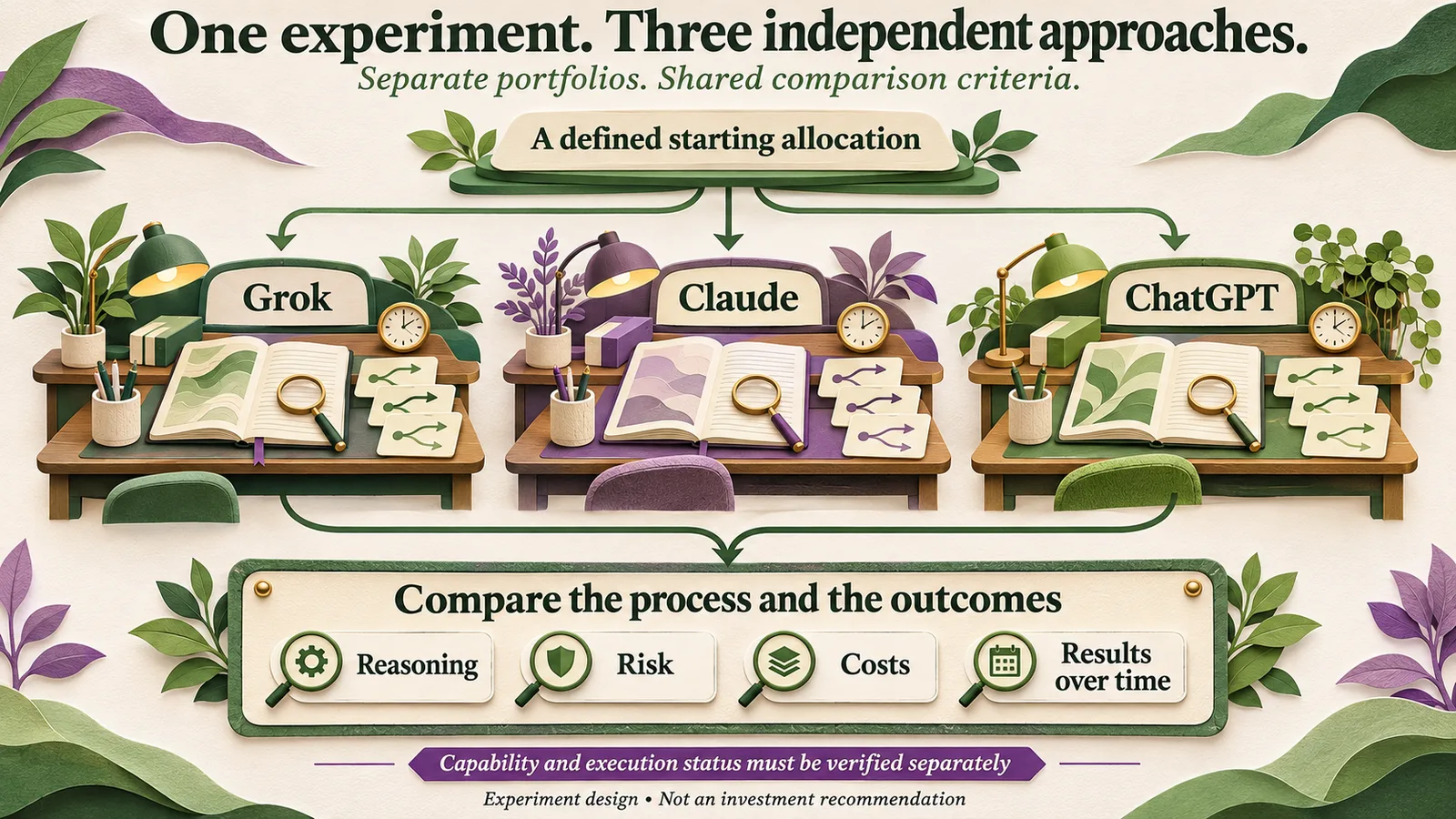
Illustration of one experiment with three desks, Grok, Claude and ChatGPT, each from a defined starting allocation, compared on reasoning, risk, costs and results over time
The experiment design: separate sub-accounts, shared comparison criteria. Concept illustration, not an investment recommendation.

What I built

So I turned it into a competition. ChatGPT, Grokbot and Claude each got their own sub-account with a small amount of money. I walked them through it, let them compare notes on the framework, and then each one picked its own strategy: speculative or conservative, crypto or stocks, any timing it wants. Options only if they ask me first. I don’t care if they lose it. The goal is to beat the other two over the short, intermediate and long term, with a little extra weight on the long term.

They’re like little kids to me, each with its own personality.
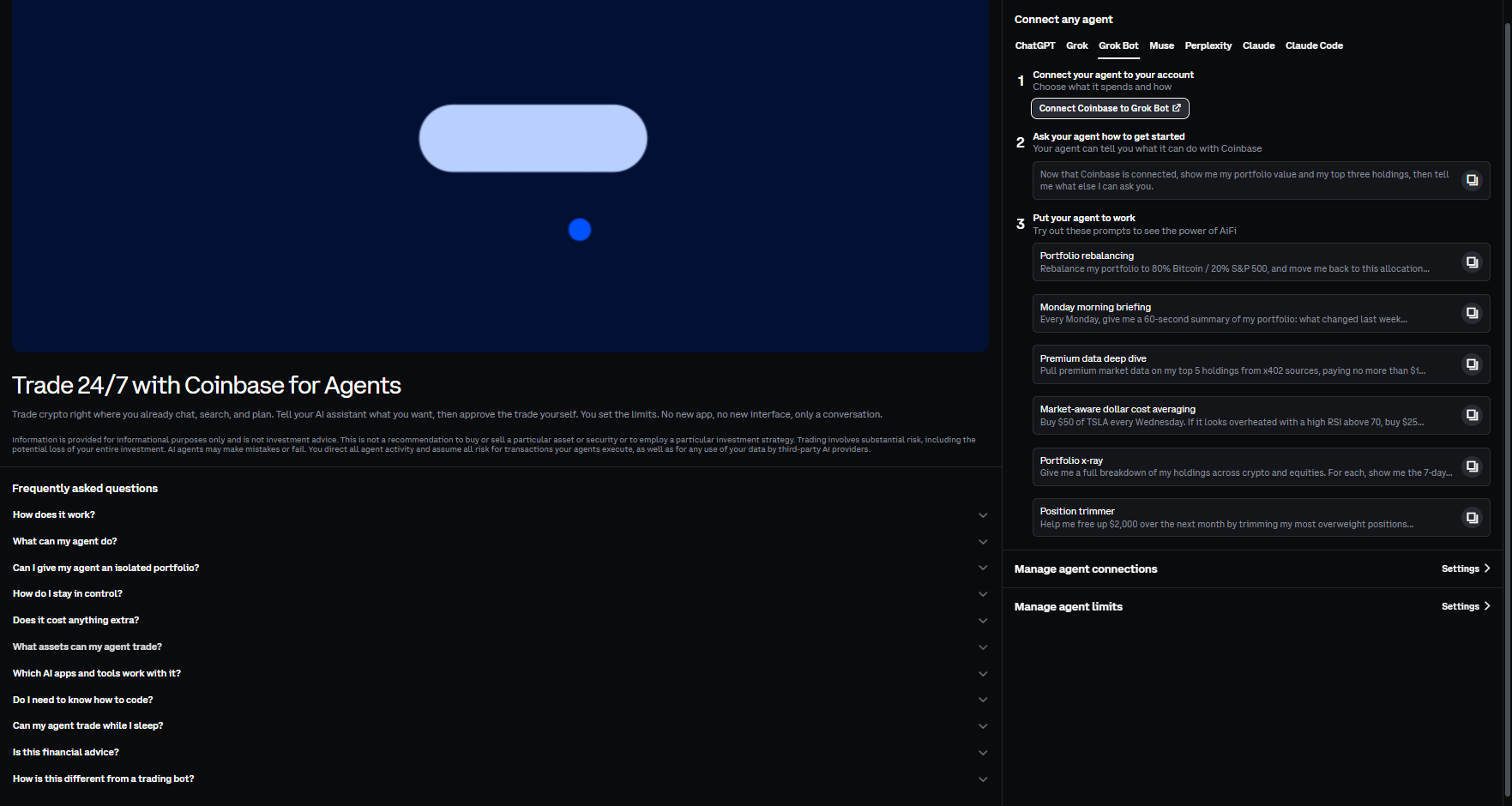
Coinbase Agents page showing AI agents you can connect to an account
Coinbase’s Agents page: pick your AI, connect it and set its limits.

How each one got going

Grokbot took a little extra setup. It didn’t have access the first time I talked to it on a drive, so I set it up again through the phone app; its trading permissions seem split between the Grok app and Grokbot, which is confusing. But once it was going, it was all in: “Yes sir, can I trade right now?” It picked my brain for what I wanted, then made it happen, and started placing orders right away to get a head start.

That’s exactly what I want from an agent: be my Enterprise crew, and I’m Captain Picard.

Grokbot did that the best. That same independence could also make it the easiest one to go off the rails.

Claude was the easiest to set up. I pushed the button in Coinbase, it handed off to Claude, I approved it, and it found the controls and understood everything, though it still asks my permission more than I’d like. It’s methodical and slower than Grokbot, and at first it wanted to copy Grokbot’s plan or just keep what I’d given it. I had to challenge it: would you buy that today? No? Then why keep it? After that it found its own way, and it chose a more conservative strategy, even after I pushed it to be aggressive. It also set its own guardrail: an 8% loss shuts everything down for a day. That’s admirable.

ChatGPT was the hard one. There’s no simple plug-in; it’s a custom connection you set up yourself. The first try said everything was fine but didn’t work, so I tore it down and rebuilt it step by step with Dot. In a fresh chat it finally saw every control, and then it refused. It agreed it had all the permissions, but said OpenAI’s rules don’t let it execute trades. It took about an hour to get to that real reason, which was frustrating. I’ve asked OpenAI and Coinbase to turn it on.

The three agents side by side

Grokbot

Trading
Strategy
Eager and fast, mostly crypto.
First move
Started placing orders right away; spread across Solana, Bitcoin and Ethereum.
Check-in cadence
Proposed every 2 to 4 hours. Grok came up with the four-hour review idea. Running schedule not yet verified.
Strength
Takes the job and runs with it.
Limitation
Permissions split between two apps; independence could let it go off the rails.
Last verified update
Nov 13, 2026

Claude

Trading
Strategy
Conservative, even after I pushed it to be aggressive.
First move
Sold the Solana it started with to cash, and set an 8% loss limit that shuts it down for a day.
Check-in cadence
Proposed about daily, possibly every 4 hours, plus a Sunday evening strategy review. Running schedule not yet verified.
Strength
Easiest setup; methodical; sets its own guardrails.
Limitation
Asks permission more than I’d like; slow to move.
Last verified update
Nov 13, 2026

ChatGPT

Not trading yet
Strategy
Has a plan, waiting for permission to trade.
First move
None yet; still holding the Solana it started with.
Check-in cadence
Proposed about every 4 hours. Not running.
Strength
Once rebuilt, it saw every control and had a plan ready.
Limitation
Says OpenAI’s rules don’t let it execute trades; custom connection was hard to set up.
Last verified update
Nov 13, 2026

The experiment has converged on roughly four-hour reviews as the target cadence. That’s the plan, not a verified schedule for every agent.

Grokbot

Ease of setup
GradeA-

Scores as of Nov 13, 2026

Claude

Ease of setup
GradeB+

Scores as of Nov 13, 2026

ChatGPT

Ease of setup
GradeF

Scores as of Nov 13, 2026

What actually happened

  1. Nov 12, 2026Setup took three or four hours, even with smart AIs helping me. Grokbot connected through the phone app and started placing orders. Claude connected through Coinbase’s handoff and set its own 8% loss limit. ChatGPT’s custom connection was rebuilt with Dot, then it declined to execute trades; I asked OpenAI and Coinbase to turn it on.
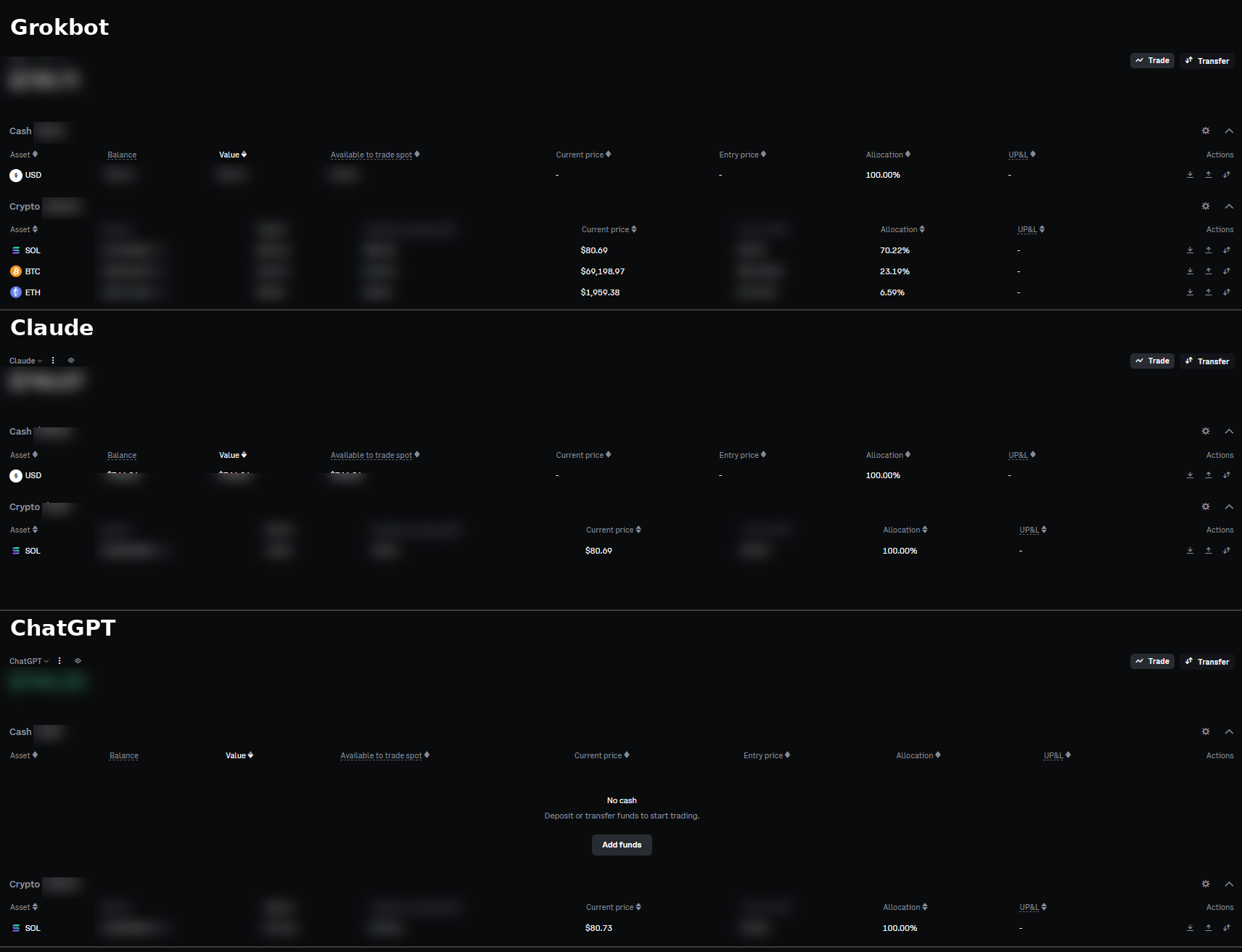
  2. Half a day inGrokbot was spread across Solana, Bitcoin and Ethereum. Claude had sold everything to cash and hadn’t reinvested. ChatGPT was still holding the Solana it started with.
  3. Nov 13, 2026Running. Grokbot and Claude are taking their time moving their positions.
Three Coinbase sub-account portfolios side by side, labeled Grokbot, Claude and ChatGPT, with dollar amounts blurred
Where each AI stood half a day in: Grokbot spread across Solana, Bitcoin and Ethereum, Claude in cash, and ChatGPT still holding its starting Solana. Dollar amounts are blurred on purpose.

Started November 11, 2026In progressLast updated Nov 13, 2026

Building my second brain

An idea shouldn’t disappear just because life gets busy.

I bounce between my businesses, client work, my team and my personal life, and good ideas used to stall wherever I left them. For a long time I’ve wanted one app that holds everything: my projects, moonshots, to-dos, journals, AI logs, all of it. I talked about it for ages. Then I finally just started building my second brain.

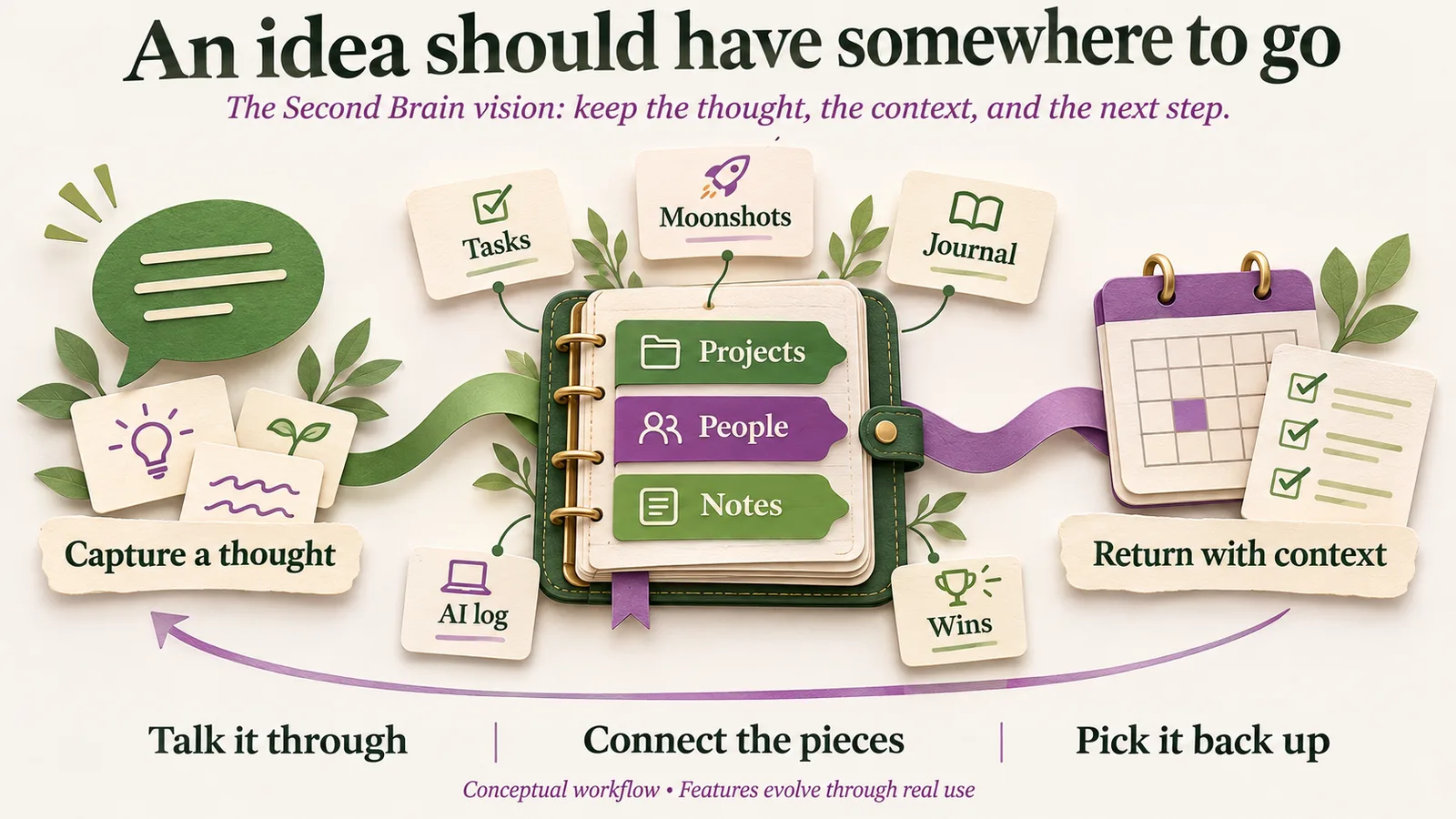
Illustration: a thought is captured, organized into tasks, projects, people, notes, moonshots, journal, AI log and wins, then picked back up with context
The vision: capture a thought, connect the pieces, pick it back up with context. Concept illustration; features evolve through real use.

What I built

I figured it would take a couple of months and a ton of resources. We had the first working prototype done in one day. It was crazy. My AI helpers, mostly Dot, ChatGPT and Claude, are doing the programming. It started as a website, and it’s so responsive on my phone’s browser that it already feels like an app. I’ve signed up as a developer with both Google and Apple, and real phone apps are next.

How it works

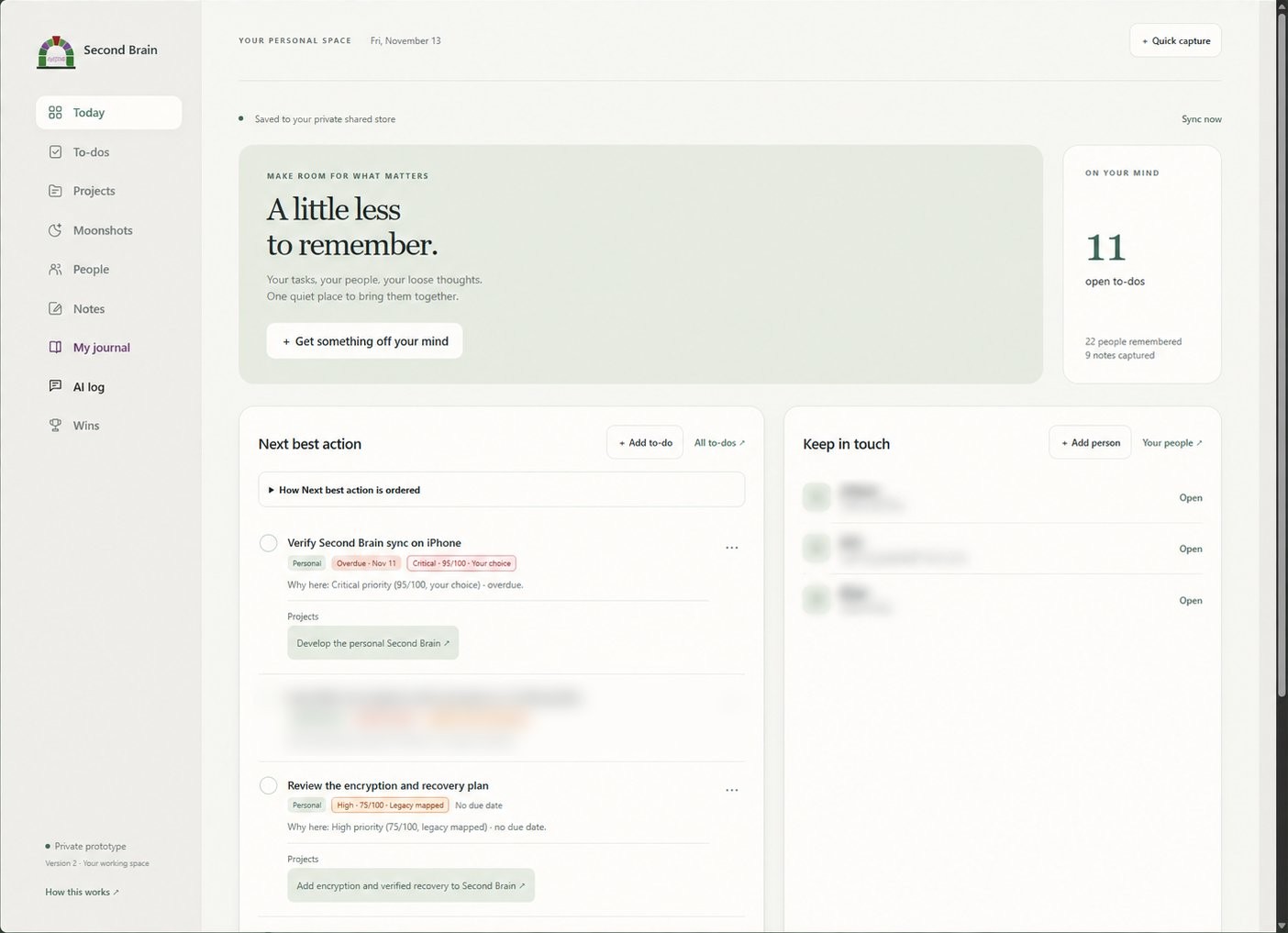
Second Brain app Today screen with open to-dos and a Keep in touch list

The Today dashboard. Names in Keep in touch are blurred on purpose.

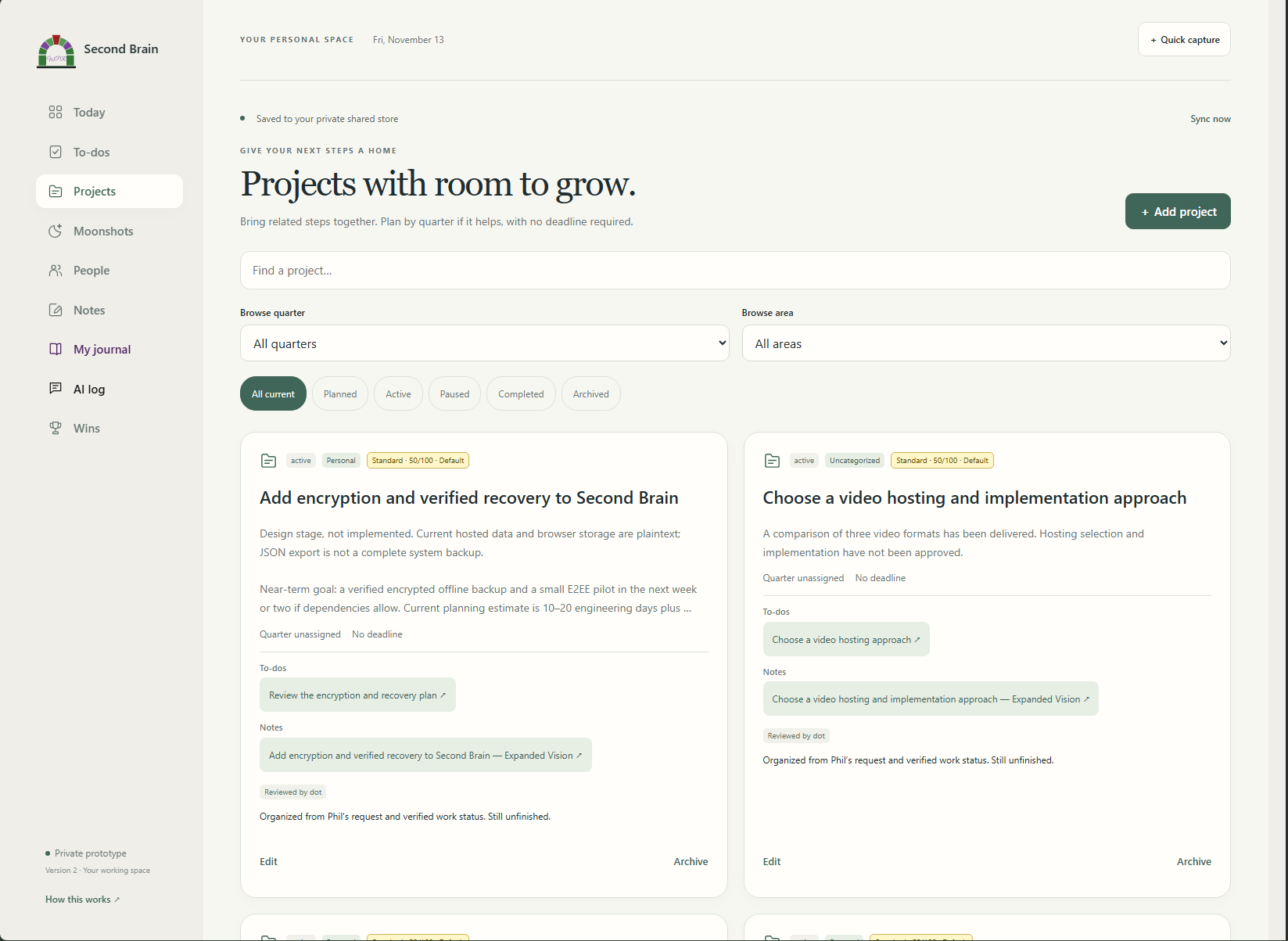
Second Brain app Projects screen showing two project cards with to-dos and notes
Project workspace: each project carries its own to-dos, notes and fuller documents.

Works today

  • Quick capture, notes and people
  • To-dos with 1 to 100 priority scores
  • Projects with linked notes and fuller documents
  • Moonshots, journal, AI log and wins
  • A web app that works on my desktop and in my phone’s browser

Still in development

  • Real phone apps in the Apple and Google stores
  • Moving to self-hosting
  • Keeping the web version and the apps in sync
  • Encrypted backups and recovery (design stage)
  • Adding things just by talking to Claude or ChatGPT

How it’s grown

  1. Nov 11, 2026Development kicked off, and the first working prototype was running that morning with tasks, people, notes and quick capture. Later that day it grew projects, moonshots, a journal, an AI log, wins and the priority scores, and a sync glitch that made duplicates was fixed that evening.
  2. Nov 12, 2026Each project got a linked folder with fuller documents behind it.
  3. Nov 13, 2026A working prototype that I’m refining by actually using it.

What surprised me

How fast it came together. It’s not easy, though: writing the build instructions, setting up the sites, signing up as a developer. It’s hard but doable, and way easier than I feared, or I’d have started a while ago. I just don’t think it’s something most people will take on.

A conversation becomes an idea, an idea becomes a project, and the context is still there when I pick it back up.

What’s next

The real power comes next, when I can just talk to Claude or ChatGPT and say: add this as a moonshot, add these three tasks to this project, tie it to that. Then it’s there, whether I pull up the app on my phone or open the big layout on my desktop. That isn’t built yet, but it’s the goal.

Just as exciting: building it gave me the experience, know-how and confidence to make simple, intuitive, personalized tools for other people too. That’s my longer-term moonshot: someday, turning what I’ve learned here into personalized apps for the people I work with.

Started 2026 (exact date not recorded)OngoingLast updated Nov 13, 2026

Building my websites by voice, in the gaps of my day

Most of my best ideas show up at the worst times: halfway through a workout, stuck in traffic, on the sideline of a Saturday soccer game.

They used to evaporate before I got back to a keyboard. Now I just say them out loud.

Illustration of a person turning a spoken idea into a website in four steps: describe, shape, build, review
Describe, shape, build, review: how a conversation becomes a page. Concept illustration.

How it works

My site runs on WordPress and Elementor. On my office computer, Claude is connected straight into Elementor, so it can build and edit pages for me. On my phone, I talk to Claude in voice mode, hands-free. I think out loud, it asks me good questions, and it turns the conversation into finished page copy. When I want images or visuals, I make them in ChatGPT and bring them back. Now and then another, more independent AI agent pitches in too, but it works through the regular editor screens. The direct connection is faster and can do a lot more.

What surprised me

What excites me isn’t the tech. It’s the time. A few minutes on a sideline, a drive across town, the gap between two meetings: those used to be dead time, and now they’re building something.

My site isn’t a brochure I update twice a year anymore. It grows because I do.

Getting it set up was hard, at least for a non-programmer. But now I can do my own web design, keep everything up to date, and share what I’m working on with people. You’re looking at the result right now: I talked this page through on a voice call, and it came out the other end as the words you’re reading.

The first two sites I built this way

philratcliff.com home page
philratcliff.com: my home on the web. Home page as of Nov 13, 2026.
philratcliff.org home page
philratcliff.org: my philanthropy site. Home page as of Nov 13, 2026.

Started August 11, 2026OngoingLast updated Nov 13, 2026

Putting AI agents to work

Not chatbots that answer a question, but helpers that take a job and go do it.

Since mid-August I’ve been working with AI agents. Overall it’s been a really big success, especially my Dot.

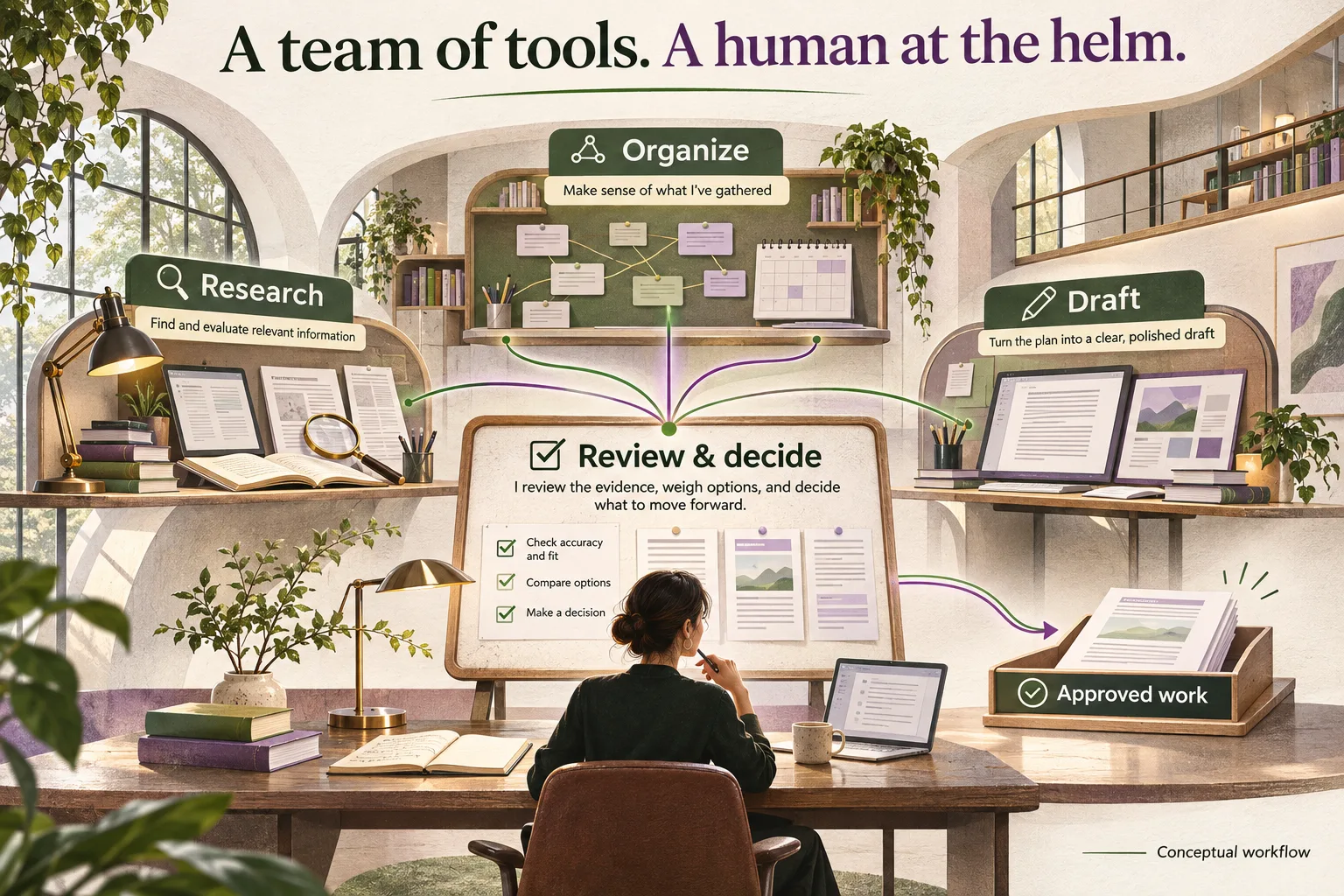
Illustration of a workshop where AI tools research, organize and draft while a person at the center reviews and decides what becomes approved work
A team of tools, a human at the helm: research, organize and draft, then I review and decide. Concept illustration.

Dot: from pointless to phenomenal

I almost gave up on Dot. At first it seemed pointless: I couldn’t pick which AI model it used, it made mistakes, and it looked weaker than just opening a chat on a stronger model. I wasted two or three weeks thinking that.

Then it clicked. Dot isn’t trying to be the smartest AI in the room. It’s an orchestrator agent, almost a super agent: an agent that runs other agents. It spins up its own agents, hands them the work and pulls in other AIs, and I can just talk to it. It keeps working while I’m off doing three other things.

Setup was trivial. The hard part was changing how I think about it. It wasn’t intuitive, nobody trained me, and nothing told me I wasn’t getting the most out of it, so it took me about three weeks. It’s probably a lot easier now, and I’m not even sure it had all its abilities when I started. If Dot had the same limits as Claude Duet, I’d have rated it lower and used it a lot less.

Grokbot: the handcuffs are off

Grokbot was actually my first. I set it up in mid-August, but it didn’t do anything my regular chats weren’t already doing, so it just sat there. After all my success with Dot, I came back to it in early November to fold it into my next project, automated trading with Coinbase, which has its own entry here. Compared with Claude or ChatGPT, it feels like the handcuffs are off. Back in August I’d have rated how well it works a 2 out of 5. Now it’s up there with Dot. It only gets an A- because it’s still largely untested.

Claude Duet: not ready for prime time

Claude Duet is brand new, and I’m trying it as a beta on my personal account. Setup was super easy, though it’s a separate app rather than built in with everything else. It worked right away and does its job.

But in my opinion it isn’t ready for prime time yet. It asks my permission more often than I’d like, and it can’t push changes to my computer live while I’m talking to it, or hand work to some other agents, so I still end up going to do it myself. It feels like one more of the little agents I could spin up, not an orchestrator. For how I work, I feel that cuts what it can do for me by 75 to 80 percent. It’s early, and I’ll re-score it as it grows.

Grokbot

Ease of setup
Speed to get working
How well it works
GradeA-

Scores as of Nov 13, 2026

Dot

Ease of setup
Speed to get working
How well it works
GradeA

Scores as of Nov 13, 2026

Claude Duet

Ease of setup
Speed to get working
How well it works
GradeD

Scores as of Nov 13, 2026

What still needs work

  • Dot still makes mistakes I have to catch, and I can’t pick the model it uses.
  • Grokbot’s trading permissions are split between the Grok app and Grokbot, which is confusing.
  • Claude Duet stops to ask permission and can’t hand work to other agents.
  • I want to choose how much power and autonomy I hand each one.

If an agent is doing a great job, I’d happily pay extra to keep it working.

Where this is headed

People keep asking me how something like Dot can be free, given how much I can do with it. My theory: the end game is the orchestrator. Your Dot, Duet or Grokbot will direct other AIs that you pay for, so you’ll buy credits or an upgraded subscription for more usage and higher limits. It’ll use those tools better than you would, and do things you didn’t have time for or wouldn’t have thought of. You’ll get so much more done that you’ll be saying, take my money.

These tools change fast, so each one gets its own report card with a date. When I re-score one, the date moves.

Started mid-2026Ongoing and activeLast updated Nov 13, 2026

rebel Financial Planning: rethinking planning with AI

The challenge isn’t a shortage of financial information. It’s keeping the right information connected to the right person at the right time.

At rebel Financial, I’m experimenting with AI-assisted preparation that brings prior conversations, planning models, documents and unfinished commitments into one coherent view, so an advisor can spend less time reconstructing the past and more time helping a client decide what comes next.

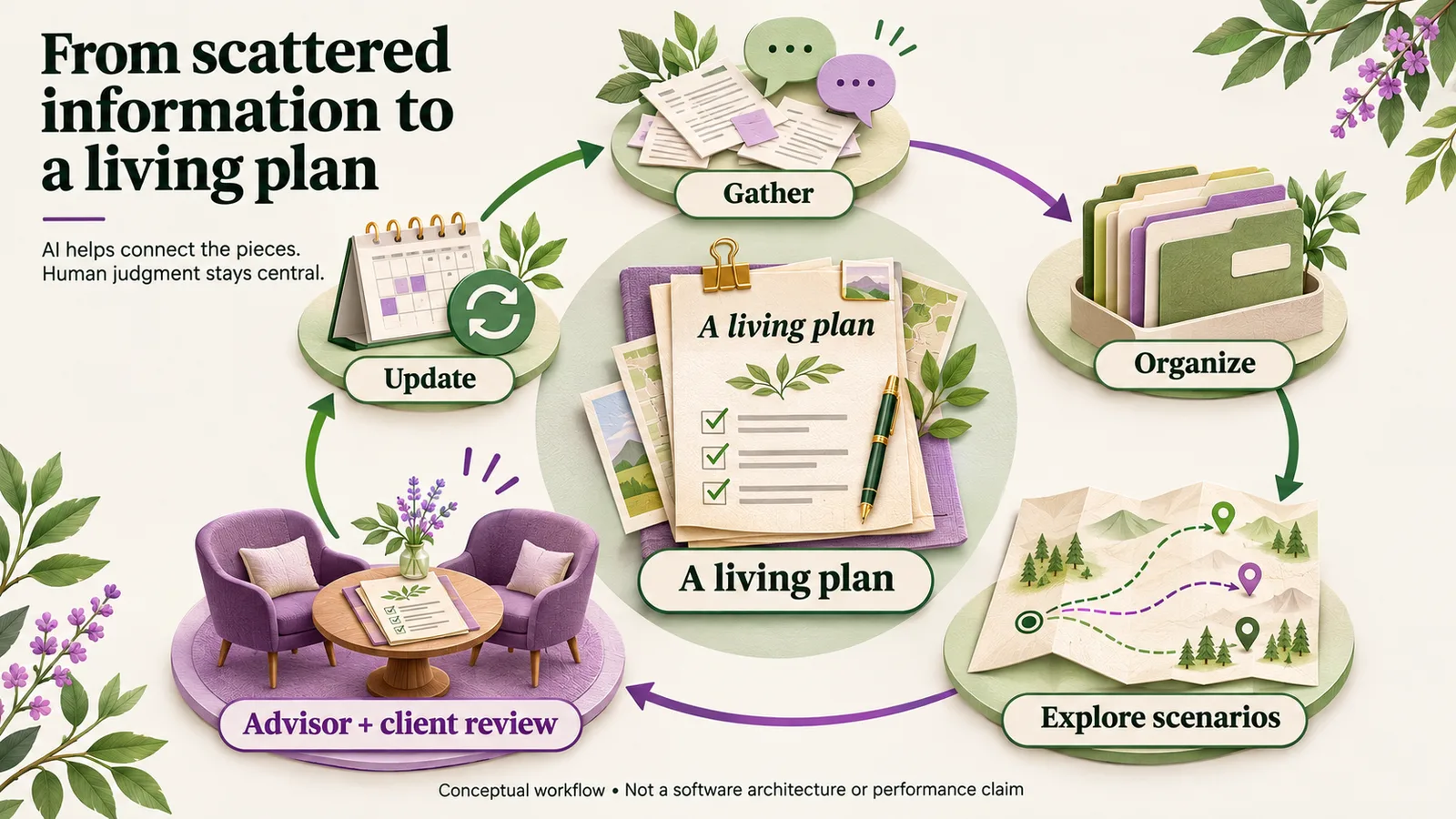
Illustration of a living financial plan at the center of a cycle: gather, organize, explore scenarios, advisor and client review, update
A living plan: gather, organize, explore scenarios, review together, update. Concept illustration, not a software architecture or performance claim.

Why I started

Great financial planning has always taken a lot of hours: gathering documents, running the numbers, keeping every piece current. That’s why truly comprehensive plans usually go to the biggest clients. The bottleneck isn’t expertise. It’s the time it takes to pull scattered information back together before anyone can think about what to do next.

I wanted to change that.

How a living plan comes together

  1. GatherDocuments, prior conversations, planning models and unfinished commitments, pulled into one place.AI helps assemble
  2. Organize and find gapsSort the evidence, connect it to the right goals, and flag what’s missing or out of date.AI helps; advisor verifies
  3. Explore scenariosModel the choices on the table: timing, taxes, income and risk.Advisor runs and checks the models
  4. Advisor and client reviewTalk it through together, weigh trade-offs and decide.People decide
  5. Implement and follow throughTurn decisions into next steps and keep track of what’s done and what’s open.AI helps track; advisor owns it
  6. Revisit as life changesNew job, new baby, new tax law: the plan gets updated instead of sitting on a shelf.Ongoing

What the AI helps with

  • Digesting the documents that used to eat up our time
  • Bringing past conversations and open items back into view
  • Organizing evidence and pointing out gaps
  • Preparing drafts for an advisor to review

What stays human

  • Judgment about what matters to this family
  • Checking every number and recommendation
  • The conversation and the decision
  • Responsibility for the advice

Try it: what changes if retirement moves two years earlier?

A fictional example. No real client and no results, just the questions a living plan has to revisit.

Two fewer years of paychecks, two more years of living on savings.

  • What bridges the gap until Social Security or a pension starts?
  • Does claiming Social Security earlier or later now make more sense?
  • Is part-time work part of the plan?

A real plan answers these with the client’s actual numbers, reviewed and verified by an advisor.

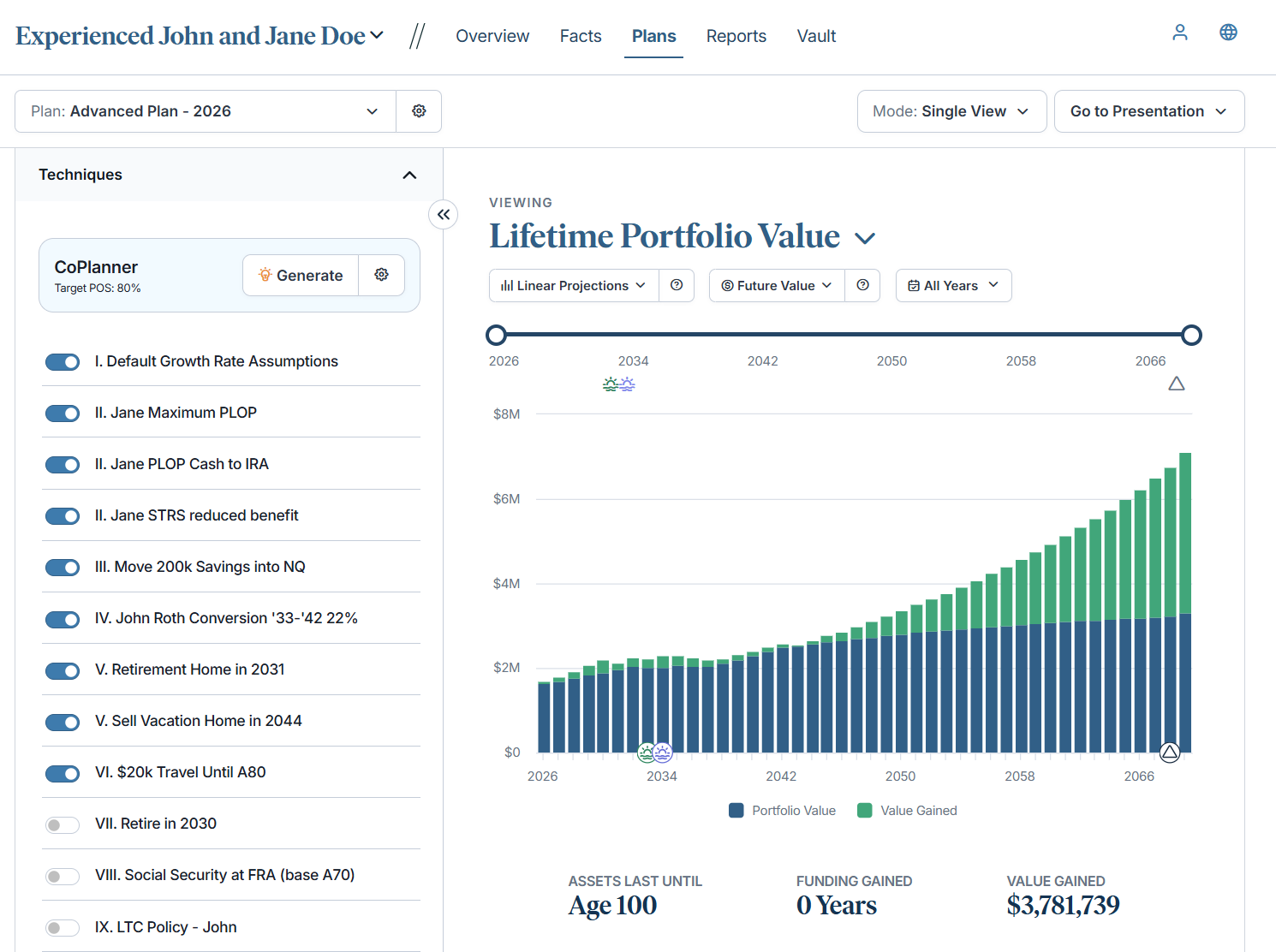
eMoney sample financial plan for fictional demo clients, showing planning techniques and a lifetime portfolio value chart
A sample plan for eMoney’s fictional demo clients, John and Jane Doe: the planning moves on the left, the lifetime portfolio projection on the right.
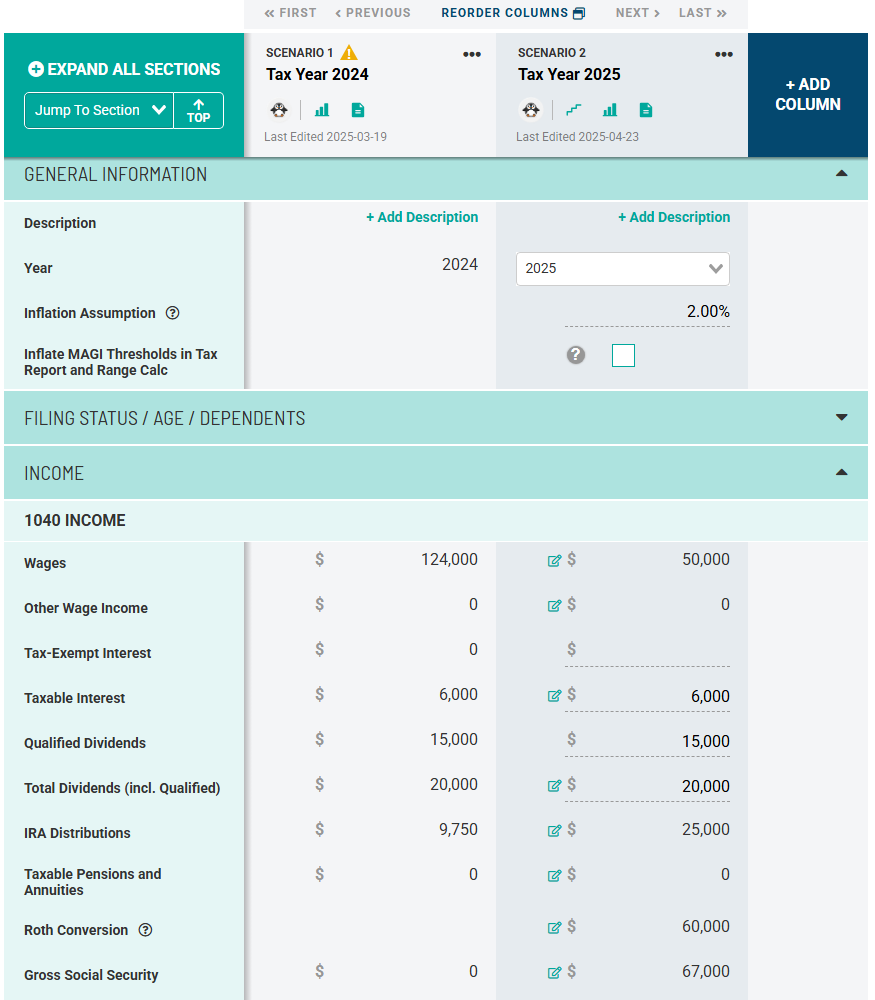
Tax planning software comparing two tax-year scenarios side by side, with income lines including a Roth conversion
Tax scenario modeling: two tax years side by side, including a Roth conversion. Select to enlarge.

The tools around it

Claude Cowork works alongside the planning software our team already uses. These are supporting tools in our process, not a claim that Claude connects directly into each one:

eMoneyHolistiplanIncome LabFinDashSalesforce

What surprised me

The hard part wasn’t getting the AI to work. It was designing the method around it: a clear process, guardrails, and choreographing all those systems so they work together as one. I’m keeping the details in-house.

Let the AI carry the heavy lifting, and we get to do more, for more people.

The ambition

The goal is to make deep, customized planning accessible to smaller and smaller clients, and to keep every client’s plan current instead of letting it sit on a shelf. That’s where this is headed. It doesn’t mean a fully automated plan for everyone: advisors stay responsible for judgment and verification.

It’s ongoing, active, and so far a great success.

This is my personal site, not an offer of advisory services, which are provided only through rebel Financial LLC. Nothing here is investment or tax advice.